
Jefferson County Directory Collections
Louisville's printed directory record starts with Otis in 1832. Later publishers overlap, and local repositories describe their coverage in different ways. Metro Archives summarizes city and suburban directories through 2000 with Civil War gaps. LFPL describes Louisville city directories from 1832 to the present and suburban directories from 1957 to the present. Verify the exact title and year before planning a visit.
| Collection | Years | Where Held | Access |
|---|---|---|---|
| Otis Louisville directory | 1832 | Metro Archives; LFPL and Filson references | Catalog and onsite research |
| Early publisher runs | 1836-1864 | Metro Archives, KHS, Filson | Books, film, and finding aids |
| Edward's, Williamson's, Campbell's, Caron's | 1861-1899, overlapping | Metro Archives, LFPL, KHS, Filson | Books and microfilm |
| KHS Louisville microfilm | 1872-1935 | Kentucky Historical Society | Rolls 95-56-3 through 95-56-57 |
| LFPL city and suburban series | City 1832-present; suburban 1957-present | LFPL Kentucky History resources | Reference help, books, film, licensed tools |
| Metro Archives summary | 1832-2000, Civil War gaps | Louisville Metro Archives | Public research room; confirm pulls |
Later KHS holdings include a 1937 social directory and selected city or suburban volumes from 1946 through the early 1960s. Exact year matters. A catalog record may describe a finding aid rather than a searchable name database, while a microfilm inventory may supply only a roll number.
Louisville Directory Publishers by Era
Not every nineteenth-century volume was a Polk directory. Collins issued runs in the 1830s and 1840s, sometimes covering Louisville with New Albany. Haldeman, Jegli, W. Lee White, Hurd & Burrows, Tanner, and Campbell followed. Jegli volumes can include Portland, Jeffersonville, or New Albany companions, which helps explain cross-river names.
Edward's directories span 1865-1899 in the local inventory. Williamson's appears in 1865-66, U.S. Campbell's from 1861-1881, and Caron's from 1878-1899. Overlap is useful because one publisher may spell a name or street differently. Cite the title, publisher, year, repository, and page instead of flattening each item into one series.
| 1832 | Otis publishes the first Louisville directory. |
|---|---|
| 1836-1864 | Several early publishers build overlapping city and regional runs. |
| 1861-1899 | Campbell's, Edward's, Williamson's, and Caron's cover long overlapping spans. |
| 1872-1935 | The detailed KHS microfilm sequence runs across 55 roll references. |
| 1957 onward | LFPL identifies a separate suburban directory collection. |
Where Jefferson Directories Live
Louisville Metro Archives has a public research room at 635 Industry Road. Its holdings include city and suburban directories, naturalization, land, marriage, probate, tax, census, maps, and municipal records. Public hours are listed as 8:00 a.m. to 5:00 p.m., but pull and access rules should be confirmed before travel.
LFPL's main Kentucky History Room is closed during the Main Library renovation. Kentucky History Collection resources and Ask a Librarian provide a remote route, while licensed databases can be used at library locations. KHS, Filson, University of Louisville Special Collections, and Jefferson County Historical Society each add holdings or reference help.
Review LFPL's collection resources beside the captured page below.
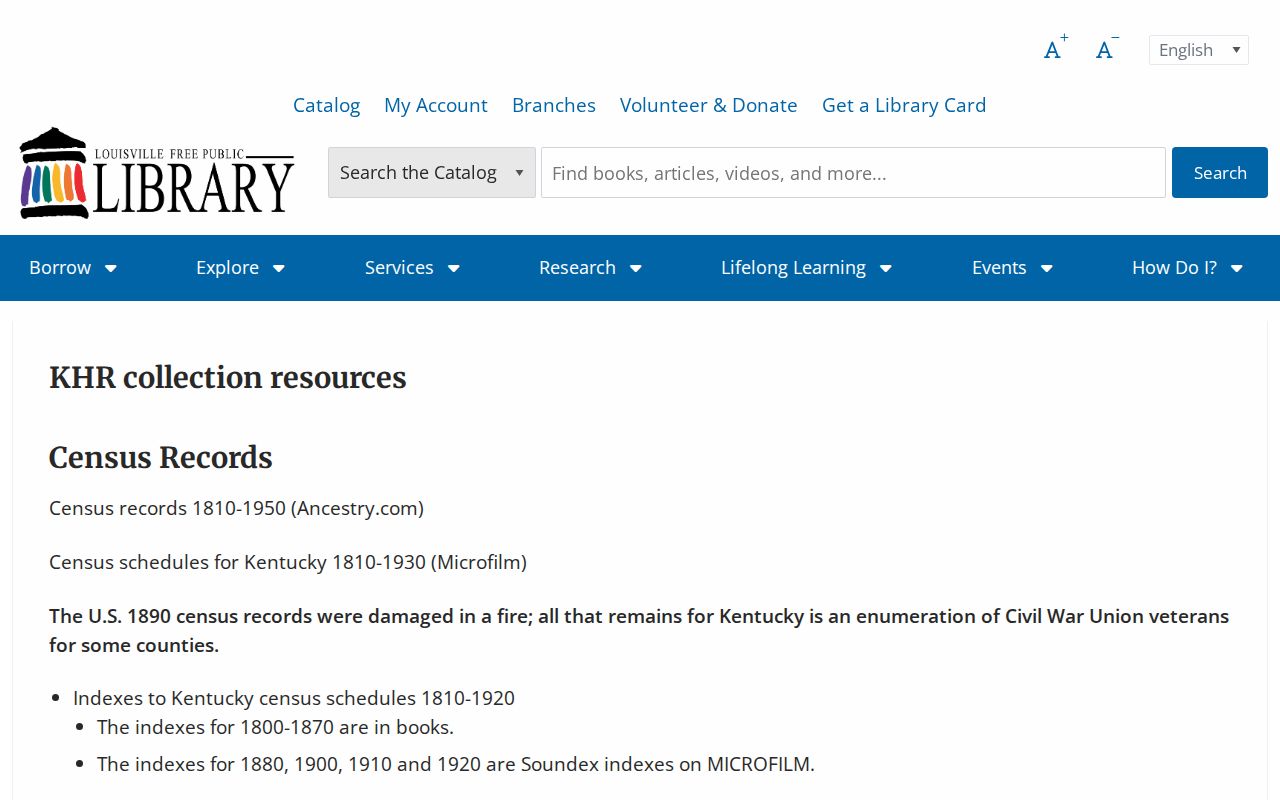
The resource list helps route a city directory find into census, cemetery, map, and local-history collections without implying every item is online.
Read Jefferson City Directory Entries
A typical entry compresses a household clue into one line. Format changes by publisher and year, so the abbreviation key at the front of the volume controls the reading. Transcribe the line as printed before expanding it.
| Name | Listed person; a spouse may appear in parentheses |
|---|---|
| Occupation | Trade, job title, and sometimes a workplace |
| Address | House number and street, sometimes with a residence marker |
| Household status | Boarding, rooming, home, or proprietor marks vary by edition |
| Widow notation | A “wid.” label may name the deceased spouse |
Occupation gives dated context, not proof of a present affiliation. Likewise, an owner or home mark should be checked against a deed or tax source. Old type, initials, married names, and machine indexing can hide a valid match.
- Criss-cross directory
- An address-first section arranged by street and house number.
- Householder index
- A list centered on the named person associated with a residence, not every member present.
- Abbreviation key
- The volume's own legend for occupation, residence, boarding, spouse, and status marks.
A Louisville Address Trail
Filson's transcribed house-research file models the right method: put dated directory snippets beside deeds, death records, cemetery entries, and census evidence. Its sequence includes 807 Hancock and later 437 Roselane, with a Roselane or RoseJane spelling issue. The value lies in the cross-source method, not in treating those names as a modern resident list.
Record the exact year, printed name, printed address, next year's entry, and the civil or land event that may explain a change. A reappearance may reflect a return, an indexing variant, or another person with the same name. One line cannot decide among them.
Note: Keep an image or full citation for each entry so a later spelling correction does not erase what the volume actually printed.
Jefferson Directories Across 1909
Louisville's 1909 street-number change can make the same house look like two addresses. Compare the last city directory before the shift with the first clear entry after it. Then use adjoining households, ward, plat, parcel, census enumeration district, and a Sanborn map to test the bridge.
This is not just an address quirk. It affects citations across directories, deeds, census schedules, maps, and modern parcel cards. Preserve the original number and spelling, state the directory year, and document the source that links the old address to the new one.
Expand a Jefferson Directory Find
LFPL genealogy resources include census schedules, HeritageQuest, Ancestry Library Edition at library locations, historical newspapers, the Louisville Newspaper Obituary Index for 1918-1987, cemetery books, and Sanborn maps for Kentucky towns from 1867-1970. These sources can explain a move, death, business, or neighborhood.
Open LFPL's genealogy resource page before using the captured overview.
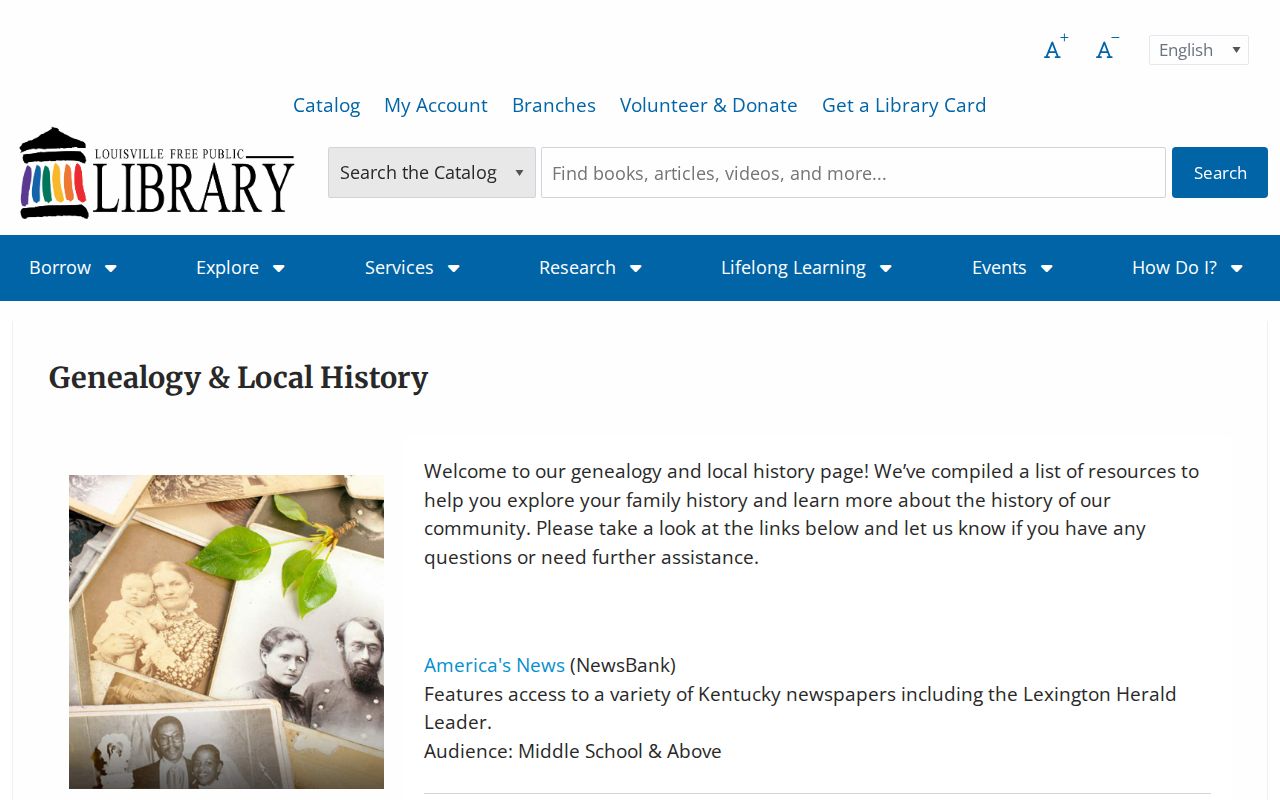
The page shows several companion sources in one place, but licensed access and onsite availability can differ during the library renovation.
Filson's Jefferson Directory Context
The Filson Historical Society collections combine catalog records, manuscripts, digitized images, directories, deeds, tax material, estate records, newspapers, and vital-register sources. The research room at 1310 S. 3rd Street is listed Monday through Friday, 9:00 a.m. to 4:30 p.m., with no pulls after 4:00 and an appointment recommended.
Nonmembers pay $10 per onsite day. Research images are free, while copies and microfilm are listed at $0.25 per page. Remote research begins with 30 free minutes, then may run up to two hours at stated member and nonmember rates. Confirm current terms before ordering.
Explore the Filson collections portal shown in the image.
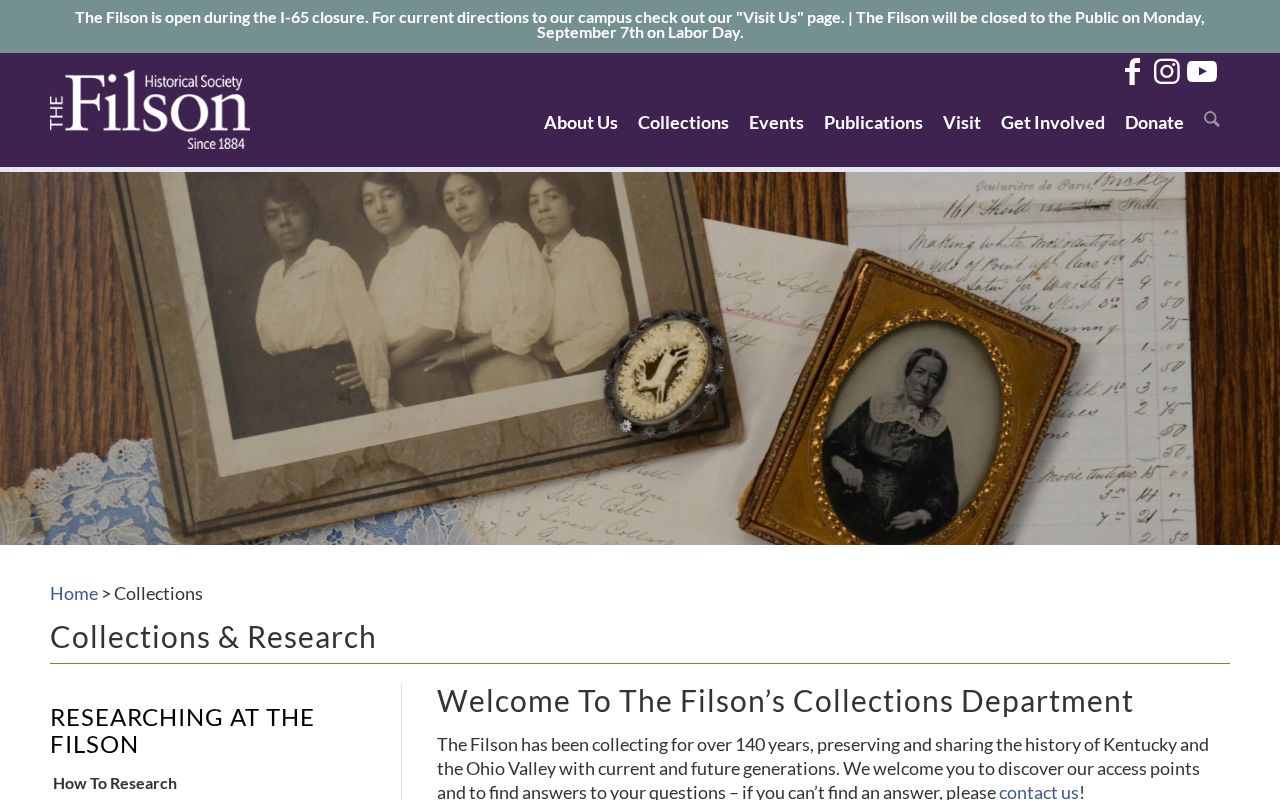
The portal is a route to catalog and staff help; a collection description does not mean every directory page has been digitized.
Jefferson Directory Gaps and Fallbacks
Metro Archives notes Civil War gaps, and exact runs vary among repositories. If one year is absent, check the years on each side, another publisher, the KHS microfilm inventory, LFPL, Filson, University of Louisville, or Jefferson County Historical Society. KHS warns that only a fraction of its physical holdings is digitized.
Newspapers, census, tax lists, cemetery books, church records, probate, and deeds can fill a missing interval. Kentucky birth and death registration also has nineteenth- and early twentieth-century gaps. A gap in one directory shelf is not proof that a household left Jefferson County.
New Jefferson Records Preservation
A May 12, 2026 Jefferson County Clerk announcement describes tens of thousands of historic records found in the office. The Clerk and Filson plan to review, catalog, and preserve them, with University of Louisville students expected to join later in 2026. Broader access through Filson is a long-term goal, not a claim that all items can already be searched online.
The early examples include an 1828 document involving Joe Holton's loan to purchase the freedom of his wife Elizabeth and child Mary, an 1858 Quinn Chapel AME property and loan record, and an 1852 record concerning African members of Centre Street Methodist Church. These are preservation examples with deep local value. They should not be converted into a present-day name list.
Recheck the Jefferson County Clerk and Filson catalogs for a collection title, item identifier, and access terms before citing one of the newly found records. The project may change the route to sources that once required staff knowledge or an office search.
Note: Cataloging creates a finding route; it does not guarantee a scanned image, name index, or unrestricted copy for each record.
Trace Family Through Jefferson Directories
Begin near a known date. Work one volume at a time, and keep a research log. The strongest trail combines a directory snapshot with an independent event or dated record.
- Find the person in a year tied to a known family event. Copy the whole entry.
- Move backward and forward through nearby volumes. Note each address, spouse label, and occupation.
- Use the street section to test the address and identify nearby names that may recur in census records.
- Pair the directory with the closest census schedule. LFPL has United States census material from 1810-1950.
- Close the interval with a newspaper, cemetery book, vital index, probate file, tax roll, or deed.
Disappearance can mean a move, death, changed name, publication omission, or directory gap. Do not choose one without support. For modern property work, shift to the Jefferson County street directory rather than stretching a historical volume beyond its date.